- Ongwen Laodog
- Posts
- Not Your Normal News (Nov.2025)


Ongwen Laodog (Not Your Normal Newsman)
WHAT COMES TO YOUR MIND WHEN YOU HEAR … IREDA, KAKOGE OR BOROBORO?

Amolokony in one of the suburbs of Lira City
Every town has its personality — and so do its neighborhoods.
Lira City is no exception. From Senior Quarters with its quiet charm to Teso-Bar’s ever-bubbling energy, each corner of this city tells its own story. Here’s a playful look at what comes to mind when you hear some of these famous (or infamous) names.
Senior Quarters (Old Money)
This is where the “District big men” of the old Lango District used to live — the District Commissioner, heads of departments, and other senior administrators.
Today, the neighborhood still breathes quiet wealth, but the titles have changed. The new residents are mostly the big businessmen of Lira — the ones who made their money long ago and now prefer peace, shade, and birdsong to the city’s noise. Think leafy compounds and the occasional slow drive of a sleek Land Cruiser.
Ireda Quarters (Government Workers)
Built by the British to house mid-level government workers, Ireda was the definition of “civil service comfort.” They even built a school — Ireda Primary — for their workers’ children. How this school later became a Church of Uganda school is still one of those local suspecious mysteries that could use a documentary. Even today, Ireda Estate carries that same image — a neighborhood for government workers, from teachers to clerks to district officers.
Teso-Bar (Kongo Ting / Malwa Central)
Once upon a time, in the 1950s through the 1990s, a small community of women from Teso region made this the headquarters of what is popularily known in Teso as Ajono. In Leblango it is kongo ting — millet brew, or malwa as it’s known across Uganda.
If you wanted malwa in Lira, there was no debate — you went to Teso-Bar.
Today, the place has transformed into a busy mini-town of shops, bars, drug shops and medical clinics. But its malwa identity never really left. The name still conjures images of long straws, laughter, and good company under a mango tree.
Kakoge (The Petty Theft Capital)
Let’s be honest — Kakoge has a reputation. 😅
Petty theft is so common here that even local leaders go on radio to lament about it. It’s the kind of place where you think twice before leaving your flip-flops outside overnight.
But don’t get it wrong — it’s also one of the most vibrant spots in the city, full of small bars, food joints, and dukas (shops) selling everything you can think of. It’s a mini-town that never sleeps — just don’t forget to lock your door.
Boroboro (New Money)
Now this is where the new rich of Lira live.
The image of “Boroboro” covers several spots — British Corner, Bar Opuu, Ocukuru — but together they spell one thing: new money.
It’s home to returnees from the Europe and America, young corporate and NGO professionals, and first-generation rich guys who missed to buy land from Senior Quarters.
Land prices here are high, crime rates are low, and the vibes are classy. In short, Boroboro is where people go when “village life” stops fitting their budget.
Railways (Dete Central)
Back in the 1890s, Railways was one of the first areas annexed to the then Lira Municipality. It was made a division of new municipality (Lira became a municipality in 1985).
It offered the best of both worlds — semi-rural, semi-urban — for people moving from the villages. They could still raise chickens, grow cassava, and brew dete (crude waragi), all while officially living “in town.”
Even today, Railways is still affectionately known as Dete Central. The brewing may have gone down, but the reputation stuck like glue.
Adekokwok (The Forgotten Side)
Adekokwok (The Forgotten Side)
Ask anyone from the western part of Lira City whether Adekokwok is in Lira City or Lira District, and most will say “district.”
Why? Because it feels like nothing much happens there. It’s quiet, rarely makes it to the FM news bulletins, and seems to exist on the city’s edge of memory.
But maybe that’s its charm — peace, space, and no nosy neighbors.
Junior / African Quarters (Retired Civil Servants)
This was built by the British for their lowest-ranking African workers — the clerks, messengers, and drivers.
You see, the colonial setup had its hierarchy: the British on top (Senior Quarters), Goan Indians next (near Akii Bua Stadium), more senior Africans in Ireda, and the rest in Junior Quarters.
When the 1990s came, the local authorities sold these houses to their workers. Many of those buyers have since retired, giving the area a calm, pensioner vibe. Walk around and you might hear more stories about the past than about last night’s incident at the dance club.
What Did I Miss?
This list is by no means exhaustive.
Lira is full of neighborhoods, each with its own story, reputation, and brand. What does your neighborhood’s name bring to mind?
Share your thoughts — let’s build this city’s “personality map” together.
AMBALAL: THE INDIAN WHO LIT UP LIRA AND LEFT A LEGACY IN EDUCATION

Abor Anteo. Ambalal’s trusted servant is still alive
Every town has that one figure whose story fades quietly into the mist of time — but whose impact still shines in ways most people have forgotten. For Lira City, one such name is Ambalal — a man whose business acumen, innovation, and kindness helped shape the early days of Lira’s urban life.
The Cotton Baron Who Built an Industry
Ambalal was a cotton buyer and ginnery owner whose company, Barap Cotton Company, once operated across northern Uganda, including West Nile. His firm built the well-known Ngeta Ginnery, which became a central pillar in the region’s cotton trade.
At a time when cotton was the lifeblood of the northern economy, Ambalal stood out for his enterprise and organization. His business not only created jobs but also connected the northern countryside to distant markets.
Lighting Up Lira — Literally
Ambalal was not just about cotton. He was also a pioneer in introducing modern amenities to the town. He owned one of the first electricity generators in Lira, which he used to light up his home and, in a gesture of public goodwill, installed what was likely the first streetlight in Lira Town Council.
For residents then, the idea of a lit street was magical — almost unbelievable. It drew crowds every evening. That single glowing light became a symbol of progress, and Ambalal became a beloved figure among locals.
A Home at the Heart of Lira
Ambalal’s home and business premises were located where Eclipse Beauty Shop now stands on Obote Avenue — a location that, in those days, served as both residence and wholesale store. His compound was known for its constant hum of business: lorries loading cotton, traders haggling, and the generator softly roaring in the background.
Later, he expanded his ventures into transportation, founding the Northern Province Bus Company, which ran buses and lorries across the north. His close associate Abor Anteo, who once worked as his transport officer and later managed his petrol station, remembered tens of lorries and several buses under Ambalal’s fleet.
The First Petrol Station in Town
In front of Ambalal’s business (then known as Uganda People’s Grocery – UPG), he set up what was probably Lira’s first petrol station. Don’t picture a modern forecourt with attendants and shiny branding — this was simply one or two fuel pumps installed just by the street. One dispensed petrol, the other diesel. Vehicles would pull up on the roadside for a refill, and it worked perfectly fine for that era.
A Bishop’s Challenge and a School Is Born
At the height of his success, Ambalal was approached by Bishop Sipiriano Kyangire, then Bishop of Lira Catholic Diocese. The bishop asked him, “You’ve done very well in business here in Lango. Why can’t you build a school so that the community can remember you with?”
Ambalal saw wisdom in those words. And from that conversation came Ambalal Primary School, a name that still rings with quiet historical pride. The school stands as a reminder of a man who came to Lango as a trader but stayed long enough to invest in its future.
A Legacy Remembered Through Oral History
Most of what we know about Ambalal comes from Abor Anteo, his loyal worker who is still alive at a remarkable 100 years of age. Anteo had worked in Ambalal’s ginnery at Aloi as a transport officer and later as a petrol station manager at the Shell station near what is now the Mayor’s Garden in Lira.
Though his memory of exact years faded with age, Anteo recalled that Ambalal Primary School was built sometime in the 1950s — a time when education, business, and urban life were all beginning to take root in northern Uganda.
Final Thoughts
Today, few people walking along Obote Avenue or past Ambalal Primary School realize that an Indian businessman once lit up Lira — literally and figuratively. He may not have built monuments of stone, but he left something better: a light, a legacy, and a lesson in community-minded enterprise.Things In Lira That Were Scandalous In The 1990s
NOTICE HOW THIS SIMPLE ENGLISH WORD IS BECOMING PART OF LEBLANGO
If you spend time in the village markets of Lango these days, you might notice something curious — the English word “ton” (as in 1,000 kilograms) is sneaking its way into our conversations as a slang. I first noticed it around 2018, and since then, I’ve heard it enough times to know this is not a one-off.
Picture this: You’re standing by a local drinking joint, and someone asks, “Kongo aromo jo?” (“Will there be enough beer for everyone?”). To which the reply comes, “Pe ipar, kongo tye tan.” (“Don’t worry, we have a ton of beer.”)
Yes, you heard right. Ton — an English word — has quietly slipped into Leblango, and no one seems to mind.
What’s Happening Here?
What we’re seeing is what linguists call borrowing — when one language takes a word from another and makes it part of its own vocabulary. It’s as old as language itself.
Leblango is no stranger to this. In fact, our language has been borrowing for centuries — first from neighboring Luo dialects, then from Kiswahili, Luganda, and later from English. Some borrowed words settle so well we forget they ever came from elsewhere.
Think about words like:
Apat kede (apart from)
Temo (to attempt)
Ciko rap (playing a rough game — rap from English “rough”)
Bega (police or military intelligence spy — from English “beggar”)
Ahedi (headmaster — straight from English “head”)
Each of these words started as an outsider but is now fully at home in Leblango speech.
Will “Ton” Survive?
That’s the big question. Some borrowed words stay forever, others fade away. What decides which ones survive?
Linguists say it depends on utility (how useful the word is), frequency (how often it’s used), and prestige (whether it carries a sense of modernity or sophistication).
“Ton” checks all three boxes:
It’s useful for talking about quantities too big
It’s used frequently in markets where big transactions happen
It feels modern — a word that connects the speaker to wider, modern trade systems
So don’t be surprised if in ten years “ton” is so common that school children use it in their essays — and no one remembers a time when it was “just English.”
Language: Always on the Move
This little story about “ton” is a reminder that languages are living things. They grow, they change, they borrow, and they innovate. And as they do, they reflect the changing life of the people who speak them.
Next time you hear someone say “kongo tye tan,” smile. You’re not just hearing about beer — you’re witnessing Leblango evolve right before your ears.
THE LEGEND SURROUNDING THIS ROCK IN KWANIA COULD MAKE AN OSCAR - WONNING MOVIE
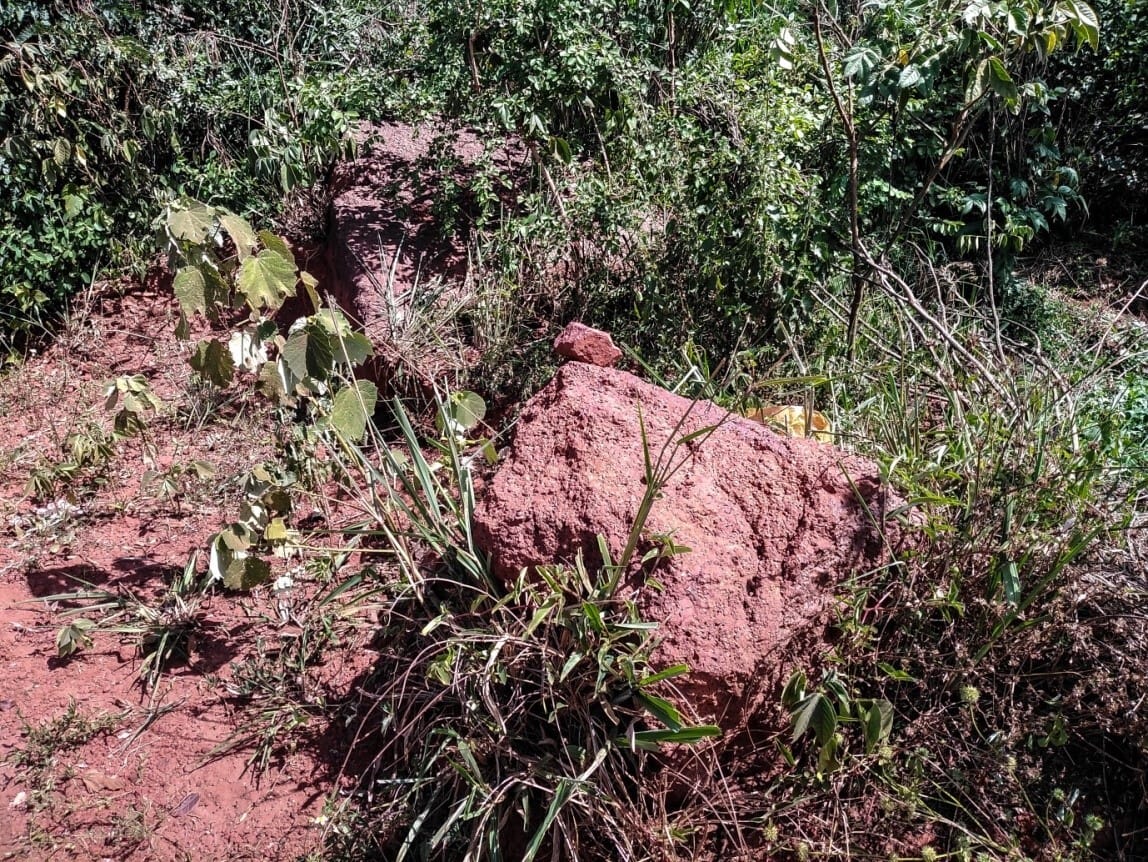
Kidi Abuni
If there’s ever a film to be made about mystery, love, courage, and a touch of superstition — then Kwania District already has its set built, and the star is a rock. Not just any rock, but one lying quietly by the roadside in Angekoma village, Nambieso Sub-county. The locals call it Kidi Abuni — “Abuni’s Rock.”
At first glance, there’s nothing extraordinary about it. Just a heavy, greyish stone half-buried in the ground, warmed by the sun, visited by children and goats. But if you stop long enough, the elders will tell you — that rock has seen things. It’s the kind of rock that would blush if it could speak.
A Rock of Chiefs, Warriors, and Lions
The story begins in the early colonial days, when a local chief named Rwot Odora Daudi served under the British. His favorite wife, Abuni, was known for her beauty and quiet strength. And the rock — well, that’s where her name lives on.
Rwot Odora was a man who believed in both power and charm. They say he insisted that the millet flour used for his bread be ground on this very rock — because it wasn’t just a grinding stone; it was a sacred one. The flour from Kidi Abuni, he believed, had the strength of warriors in it. And so Abuni would come here often, grinding under the midmorning sun, the sound of stone against grain echoing like a prayer for her husband’s power and favor.
But the legend of Kidi Abuni runs deeper — and darker — than that.
Long before Rwot Odora’s time, this was no ordinary stone. It was the gathering ground for Lango warriors before great battles. Men like Agwai Bololing, Arebo Adar, Otim Ario, and Amwata Ayor would come here to prepare for war. They came not just for courage, but for ritual.
At the heart of those preparations was an elder named Aweto — a tattoo master. He used sharp fragments cut from the same quarry to mark the faces of commanders. To be tattooed here was to carry a blessing — or perhaps a curse — depending on which side of the spear you stood. Warriors even carried small pieces of the rock into battle, believing it held the power to make them victorious.
But victory often demanded its share of blood. And so, stories of lions lurking near the rock began to spread. The villagers whispered that the lions were guardians — protectors of the stone. They prowled the area by dusk, and those foolish enough to cross after 3 p.m. often didn’t return. Hence, the nearby village got its unofficial name — Ongo Ceng, meaning “sleep over.” Travelers had to spend the night there rather than risk meeting the rock’s guardians.
In later years, a Catholic priest — perhaps unaware of the stone’s history — broke off parts of it to build a nearby church. Whether by ignorance or divine intention, no one knows. The church still stands. But the villagers say that from that time, the lions vanished, and with them, the rock’s power to bless warriors.
A Small Request From Ongwen Laodog
Dear reader,
If you’ve been enjoying my stories — the humor, the history, the “from-the-ground-in-Lango” flavor — please consider supporting my work through a donation. Your contribution helps me spend more time digging up rare stories, taking unique photos, interviewing elders, and serving you those delicious cultural insights that mainstream media ignores.
I started Not Your Normal News to preserve the stories, language, and wisdom of Lango. Every edition is my way of connecting our elders’ voices, our heritage, and our innovations with Ugandans spread across the world. I try to tell these stories the Lango way: lightly, playfully, and honestly — just like we chat at the trading centre.
But to keep this work growing, I need your support. Funds help with equipment, travel, research, and production costs so I can keep bringing you the stories that would otherwise disappear.
I’m also available for personalized genealogy projects — for individuals or families. If you want your family tree documented in video or written form, I can help you trace your roots, interview your elders, and produce a beautiful family documentary.
Thank you so much for your support — financial, material, or even simply by reading every edition. It truly keeps this work alive.
Ongwen Laodog
email: [email protected]
Whatsapp: +256751227228
Mobile: +256785345614